
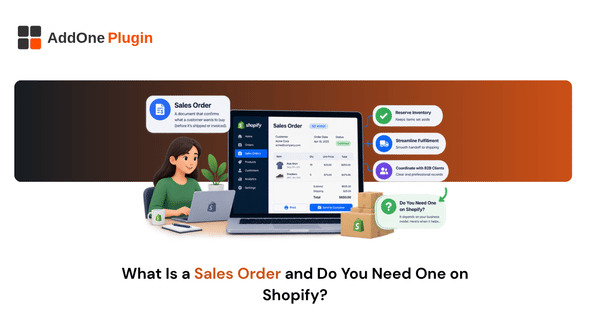
Search for “sales order” and Shopify’s own admin, and you won’t find a feature by that exact name. That doesn’t mean the concept doesn’t exist on the platform, it just means Shopify calls it something else. This guide explains what a sales order actually is, why the term trips up so many Shopify merchants, and whether you need a formal one for your business.
What a Sales Order Is (and Why the Term Confuses Shopify Merchants)
A sales order is a document the seller creates to confirm they can fulfill a buyer’s request, locking in the price, quantity, and terms before the order ships. Shopify handles this function, it just doesn’t use the term “sales order” anywhere in its interface.
The traditional definition
In traditional B2B and ERP systems, a sales order is generated by the seller after receiving a purchase order from the buyer. It’s the seller’s formal acceptance, and it’s what triggers picking, packing, and shipping.
Why Shopify doesn’t have a feature literally called “Sales Order”
Shopify was built primarily for direct-to-consumer retail, where an order is placed and paid for in one checkout step. When Shopify added B2B functionality, it extended an existing feature, draft orders, to cover the sales order role instead of building a separate document type from scratch.
How Shopify Actually Handles This: Draft Orders
If you’re looking for Shopify’s version of a sales order, draft orders are where to look.
What a draft order covers that a sales order normally would
A draft order lets you build an order on a customer’s behalf, apply custom pricing or discounts, set payment terms, and send it for approval before it becomes a real order. That’s functionally the same job a sales order does elsewhere.
Where the two concepts diverge
The main difference is flexibility. A traditional sales order is usually generated automatically from an accepted PO inside a dedicated system, while a Shopify draft order is created manually by a staff member or a customer with the right permissions. For most small to mid-sized sellers, that manual step isn’t a real limitation.
Do You Need a Formal Sales Order Process?
Whether you need something more structured than a plain draft order depends on how your business actually takes orders.
If you’re B2C or low-volume B2B, probably not
If most of your orders come straight through checkout, or your B2B volume is low, a formal sales order process adds overhead without much benefit. Draft orders alone are enough to handle the occasional custom quote.
If you’re wholesale/distributor with POs coming in, yes, here’s why
If you regularly receive purchase orders from business buyers and need a consistent way to confirm pricing and terms before fulfillment, treating draft orders as a real sales order step protects you from shipping the wrong quantity or the wrong price. It also gives you a clean record to reconcile against the invoice later, something we cover in our comparison of purchase orders, sales orders, and invoices on Shopify.
Turning a Confirmed Order Into a Paid Invoice
Once a draft order is confirmed, the next step is making sure it turns into an invoice without anything getting lost in translation.
From draft order to InvoiceForge-generated invoice
InvoiceForge picks up the confirmed order details and generates a matching invoice automatically, so the pricing, quantities, and customer information stay consistent between the two documents instead of being retyped by hand.
Keeping the sale, the confirmation, and the bill traceable to each other
The goal is a straight line from the original request to the confirmed draft order to the final invoice, with nothing changing in between that isn’t reflected everywhere. That traceability is what actually protects you if a customer questions a charge months later.
Related Reading
If you’re setting this process up for the first time, two of our other guides go deeper on the pieces that connect to this one.
See our full draft orders and custom quotes guide for setup steps
For the actual step-by-step of building and sending a draft order, our guide to draft orders and custom quotes on Shopify walks through the setup.
See PO vs. Sales Order vs. Invoice for how the three documents relate
If you want the full picture of how a purchase order, a sales order, and an invoice all connect, our PO vs. sales order vs. invoice comparison lays it out side by side.
A sales order, on Shopify, is really just a confirmed draft order with the right information locked in before fulfillment. You don’t need a separate system to get the benefit, you need a consistent habit of confirming terms before you ship and generating the invoice from that confirmed record, not from scratch. If that last step is still manual, InvoiceForge closes the gap between a confirmed order and a sent invoice automatically.
[…] Confirming the draft order reserves the relevant inventory and effectively creates your sales order record, the seller’s commitment to fulfill exactly what was agreed. We cover this specific mapping in more depth in what a sales order is and whether you need one on Shopify. […]